Darch Lawn Care: Fix Compacted Soil in New Estates
New homes can look fantastic, but getting a healthy lawn established around a newer property isn't always straightforward.
One of the most frustrating problems homeowners can experience is grass that remains thin, develops bare patches or struggles to absorb water even though the lawn is being watered regularly.
Sometimes, the problem isn't the grass — it's the soil underneath it.
Construction activity, earthworks, heavy machinery and repeated foot traffic can compact soil and affect the conditions grass roots need to grow.
When soil becomes compacted, water, oxygen and nutrients may have difficulty moving through the root zone. The result can be uneven growth, poor water absorption and a lawn that becomes stressed quickly during Perth's hotter weather.
For Darch homeowners, identifying the cause of the problem before adding more water or fertiliser can make lawn maintenance much more effective.
HomeGreens provides lawn mowing and broader lawn-care services, including mowing, fertilising, aeration and verti-mowing, helping homeowners maintain lawns according to their condition and seasonal requirements.
Why New-Estate Lawns Can Struggle

A newly built home doesn't necessarily mean the soil underneath the lawn is ready for healthy turf.
During construction, soil may be:
Moved or redistributed
Driven over by heavy machinery
Compacted by construction traffic
Covered and disturbed during landscaping
Left with inconsistent soil depths
This can change the structure of the soil and reduce the spaces that allow water, oxygen and roots to move through it.
You may notice that one section of your lawn looks healthy while another remains thin or patchy.
You may also find that:
Water sits on the surface
Water runs towards paving
Grass becomes stressed quickly
Bare patches repeatedly return
Fertiliser seems to have little effect
Some sections grow faster than others
Before applying more products, look at what is happening beneath the grass.
Is Your Darch Lawn Suffering From Compacted Soil?
There are several signs that may indicate compaction.
Watch What Happens When You Water
When you water the lawn, observe how quickly the water enters the soil.
If water remains on the surface, pools in certain areas or runs away instead of soaking in, compaction could be contributing to the problem.
Other signs can include:
Hard or dense soil
Poor water penetration
Thin grass
Bare patches
Shallow root development
Uneven lawn growth
Water pooling
Areas that dry out unusually quickly
Grass becoming stressed during hot weather
However, these symptoms don't automatically prove that compaction is the cause.
Poor irrigation coverage, unsuitable soil, drainage issues, excessive thatch, shade and nutrient deficiencies can produce similar symptoms.
The goal is to identify the underlying problem before choosing the treatment.
What About Clay and Sandy Soil?

It's important not to assume every Darch property has exactly the same soil.
Different properties can have different soil conditions depending on landscaping, construction, imported soil and previous site work.
Clay-heavy soil
Clay soil can hold water but may become difficult to work with when compacted. Poor drainage can also become more noticeable.
Sandy soil
Sandy soil can drain quickly but may have difficulty retaining moisture and nutrients.
This means a lawn struggling to absorb or retain water doesn't automatically need more watering.
The right approach depends on the actual soil and lawn conditions.
Don't treat the symptom before identifying the soil problem.
If water isn't penetrating properly, simply increasing irrigation may not solve the underlying issue.
How Aeration Can Help a Compacted Darch Lawn
When compaction is affecting the lawn, aeration may help improve access to the root zone.
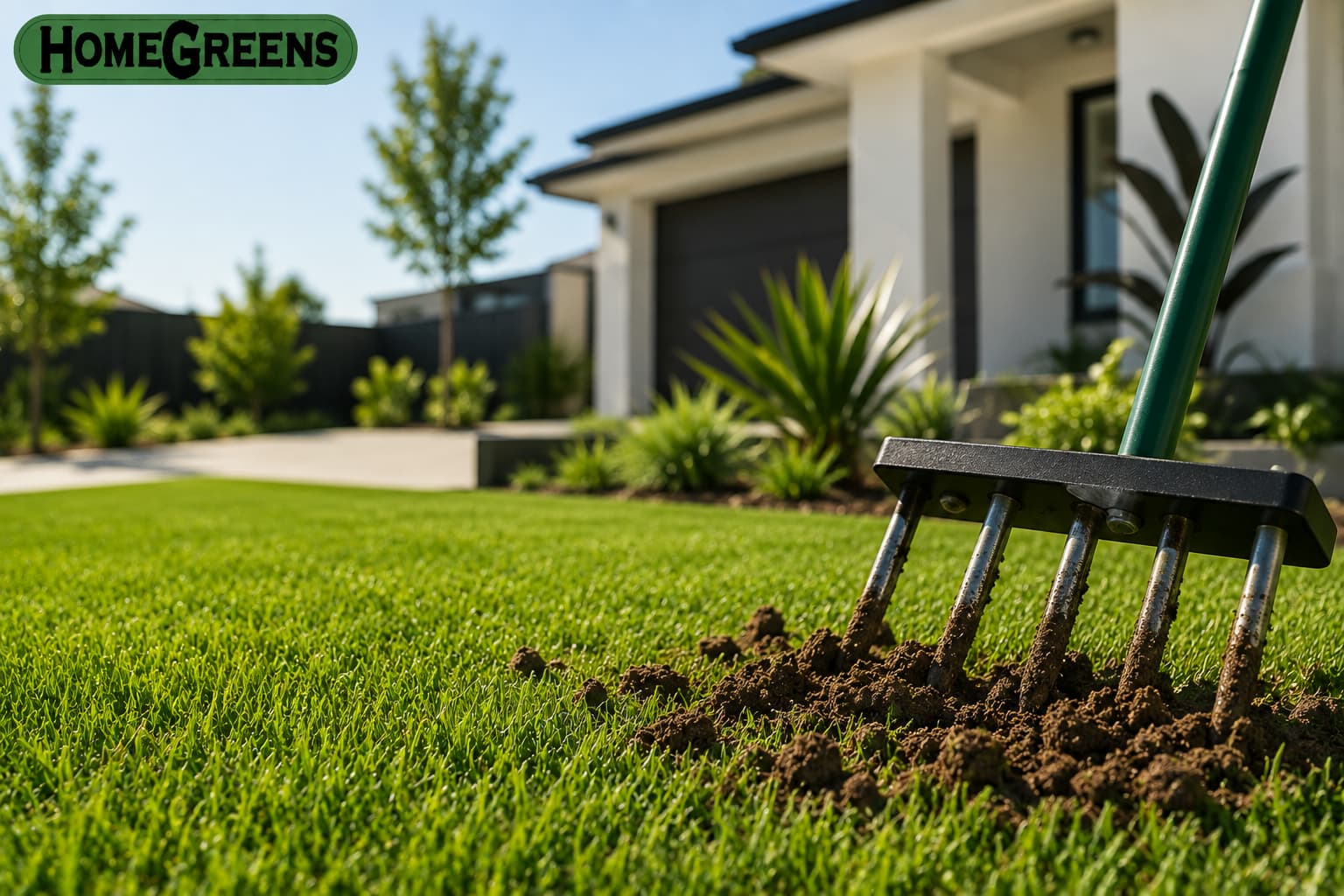
Aeration creates openings through the turf and into the soil. These openings can provide pathways for water and oxygen to move through the soil more effectively.
Potential benefits include:
Improved water penetration
Better oxygen movement
Improved access to the root zone
Reduced effects of soil compaction
Better use of irrigation
Support for healthier root development
However, aeration isn't a universal solution for every lawn problem.
If the underlying issue is severe drainage, unsuitable soil, irrigation failure or another condition, additional treatment may be required.
HomeGreens offers Lawn Aeration as part of its lawn-care services.
How HomeGreens Can Help With Darch Lawn Care
If your Darch lawn is thin, patchy or struggling to absorb water, repeatedly adding fertiliser or increasing watering may not address the real problem.
HomeGreens can help with the ongoing maintenance and treatment of the lawn, depending on its condition.
Professional Lawn Mowing
Regular mowing helps maintain an appropriate lawn height and keeps the property looking neat.
Avoid scalping a stressed lawn or removing too much leaf material in one cut.
Lawn Aeration
Where compaction is affecting water movement or root access, aeration may help open the soil.
Lawn Fertilising
If the lawn requires additional nutrients, appropriate fertilising can support healthier growth.
HomeGreens provides Lawn Fertilising.
Verti-Mowing
Established lawns can sometimes develop excessive thatch.
Where appropriate, verti-mowing can help remove excessive thatch and improve access to the soil.
Learn more about Verti Mowing.
A Better New-Lawn Maintenance Routine for Darch
A healthy lawn should be managed as a system rather than relying on one treatment.
1. Mow Consistently
Keep mowing consistent and avoid removing too much leaf material at once.
Scalping a lawn that is already stressed can make it more vulnerable to heat and moisture stress.
2. Water According to Conditions
Water according to the lawn's needs, weather conditions and current local watering requirements.
Don't automatically increase watering because the lawn looks stressed.
If water isn't penetrating the soil, investigate whether compaction or another issue is contributing.
3. Monitor Soil Condition
Look for:
Hard soil
Pooling water
Poor penetration
Repeated bare patches
Uneven growth
These can indicate that the root zone requires closer attention.
4. Fertilise Strategically
Fertilising can support lawn growth when nutrients are required.
However, fertiliser shouldn't be used to compensate for unresolved soil, drainage or irrigation problems.
5. Consider Aeration
If compaction is restricting water penetration or root development, aeration may help improve access to the root zone.
6. Manage Excessive Thatch
If an established lawn has excessive thatch, verti-mowing may help remove the build-up and improve access to the soil.
How Often Should You Mow a Darch Lawn?
There isn't one mowing schedule that suits every Darch lawn.
Growth depends on:
Grass type
Season
Rainfall
Irrigation
Sunlight
Soil condition
Lawn health
As a practical starting point, many Perth lawns may need mowing approximately every 1–2 weeks during active growth.
During cooler periods, growth generally slows and mowing can become less frequent.
The better rule is:
Mow according to the lawn's growth rather than waiting until it becomes severely overgrown.
For professional lawn mowing, visit Lawn Mowing Perth.
Darch New-Estate Lawn Care Checklist
If your new lawn isn't performing as expected, use this checklist before changing your entire maintenance routine.
Problem
What You May Notice
What to Investigate
Hard soil
Surface feels dense
Possible compaction
Water pooling
Water remains on surface
Compaction or drainage
Thin grass
Weak or sparse growth
Soil, water, nutrients and mowing
Bare patches
Same areas repeatedly fail
Soil, irrigation or traffic
Uneven growth
Some areas grow differently
Shade, water or soil
Excessive thatch
Thick layer above soil
Whether verti-mowing is appropriate
Pale grass
Weak colour and growth
Nutrient and lawn condition
Dry patches
Certain areas dry faster
Irrigation coverage and soil
This approach helps you avoid automatically assuming that every lawn problem is caused by a lack of water.
Darch Lawn Care for New Estates: What Homeowners Should Avoid
Some common lawn-care habits can make a struggling lawn harder to manage.
Don't Keep Adding More Water
If the soil is compacted or drainage is poor, additional water may simply sit on the surface or run away.
Don't Over-Fertilise
Applying more fertiliser doesn't necessarily fix poor soil, compaction or irrigation problems.
Don't Scalp the Lawn
Cutting too much leaf material at once can stress already struggling turf.
Don't Ignore Repeated Bare Patches
If the same areas repeatedly fail, investigate why instead of simply reseeding them each time.
Don't Treat Every Lawn the Same
Sunlight, soil, grass type, irrigation and foot traffic can vary across the same property.
A maintenance plan should reflect those differences.
FAQs
Why is my new Darch lawn struggling?
Several factors can contribute, including soil compaction, poor soil preparation, irrigation problems, nutrient deficiencies, unsuitable mowing, shade and drainage issues.
How do I know if my Darch lawn soil is compacted?
Hard soil, poor water penetration, surface pooling, shallow roots, thin grass and repeated bare patches may indicate compaction. However, these symptoms can have other causes, so the underlying condition should be assessed.
Can aeration fix clay soil?
Aeration can help relieve compaction and improve pathways for water and oxygen, but it does not automatically fix every clay-soil problem. Severe soil or drainage problems may require additional soil improvement.
Should I water my Darch lawn more if it turns brown?
Not necessarily. Brown or stressed grass can result from heat, poor irrigation coverage, compacted soil, nutrient problems or other conditions. If water isn't entering the soil effectively, simply watering more may not solve the problem.
How often should I mow my Darch lawn?
Many Perth lawns require mowing around every 1–2 weeks during active growth, but actual mowing frequency should depend on grass type, season and growth rate.
Does verti-mowing help a new lawn?
Verti-mowing is generally more appropriate for established lawns with excessive thatch. Newly established turf should first be allowed to develop properly before aggressive treatments are considered.
Can HomeGreens help with a Darch lawn?
Yes. HomeGreens provides lawn mowing and broader lawn-care services, including fertilising, aeration and verti-mowing where appropriate.
Why Choose HomeGreens for Darch Lawn Care?
A struggling lawn doesn't necessarily need more water or more fertiliser.
It needs the right maintenance approach.
HomeGreens can help Darch homeowners:
Save Time
Reduce the time spent mowing, edging, cleaning and trying different lawn treatments.
Maintain a Healthier Lawn
Use regular maintenance and appropriate treatments based on the lawn's condition.
Address Compaction
Consider aeration where soil compaction is affecting water penetration and root access.
Manage Thatch
Use verti-mowing where excessive thatch is affecting an established lawn.
Maintain Property Presentation
Keep the lawn looking neat and cared for throughout the year.
You can view the complete range of HomeGreens Services.
You can also see examples of lawn-care work in the HomeGreens Gallery.
Don't Keep Throwing Water and Fertiliser at a Struggling Darch Lawn
If your lawn is hard, patchy or refusing to absorb water, the solution may be underneath the grass.
Compacted soil, poor drainage, excessive thatch, irrigation problems and nutrient deficiencies can all affect lawn performance.
The first step is understanding what your lawn actually needs.
HomeGreens can help you develop a practical lawn-care approach based on the condition of your property.
You can also Contact HomeGreens to discuss your lawn-care requirements.
